




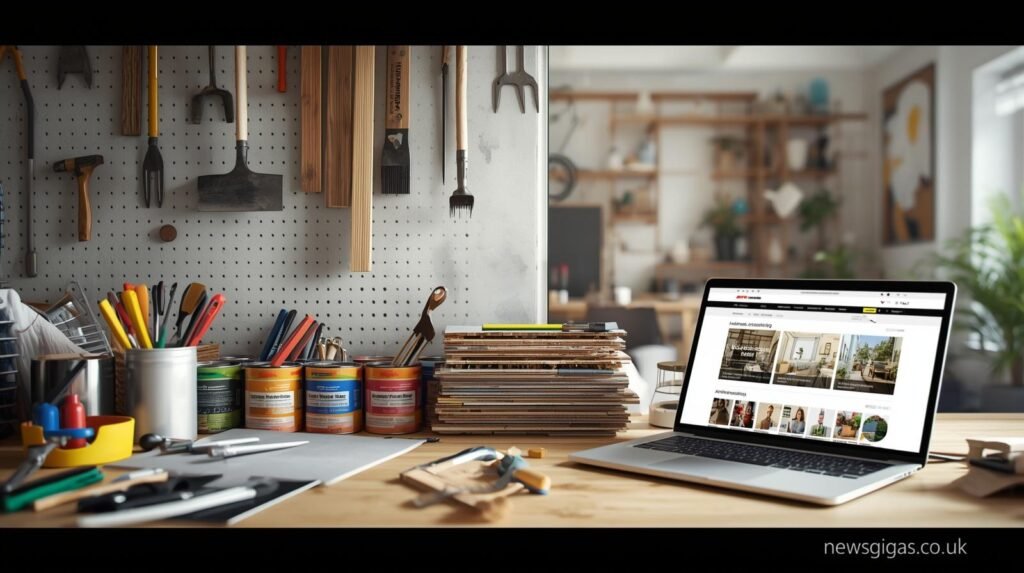
DIY com is the official online domain of B&Q, one of the largest home improvement retailers in the United Kingdom. The website focuses on providing a wide range of do-it-yourself products, tools, and home renovation solutions for both professional builders and everyday homeowners. It acts as a digital extension of physical B&Q stores, offering users access to thousands of products in categories like gardening, construction, decorating, and interior design.
The importance of DIY com comes from its strong alignment with the global “do it yourself” movement, which encourages people to complete home improvement projects independently. The domain name itself is highly valuable for SEO because it directly matches a common search intent keyword “DIY,” which increases organic visibility on search engines. Over time, DIY com has become a trusted platform for users looking for reliable home improvement solutions online.
History and Evolution of DIY.com as a Digital Brand
DIY com has its roots in the expansion of B&Q, a UK-based home improvement company founded in 1969. Initially, B&Q operated only physical stores, but with the rise of digital commerce in the late 1990s and early 2000s, the company needed a strong online identity. Instead of relying only on brand-based domains, they adopted DIY com to capture broader search traffic related to home improvement.
This strategic decision allowed the company to rank for generic search terms such as “DIY tools,” “home renovation ideas,” and “garden equipment.” Over time, DIY.com became the central digital hub for B&Q’s online retail operations. Today, it represents not just a shopping platform but a complete ecosystem of home improvement services, including product browsing, inspiration content, and project guidance.
The evolution of DIY com reflects the broader shift in retail from physical-only shopping to hybrid digital ecosystems. It continues to evolve with modern e-commerce trends such as mobile shopping, click-and-collect services, and personalized product recommendations.
How DIY com Works as a Modern E-Commerce Platform
DIY com functions as a large-scale e-commerce website where users can browse and purchase home improvement products. It is structured to serve both casual DIY enthusiasts and professional contractors by offering an extensive product catalog. Users can search for items, compare specifications, and check availability in nearby stores or for home delivery.
One of the key strengths of DIY com is its integration with physical B&Q stores. Customers can order products online and collect them in-store, which enhances convenience and reduces delivery time. The platform also provides product recommendations based on browsing behavior, helping users discover related items for their projects.
In recent years, DIY com has also integrated marketplace-style listings, allowing third-party sellers to offer products on the platform. While this expands product variety, it also introduces mixed user experiences depending on the seller, making it important for customers to carefully review product details and seller information before purchasing.
Product Range and Categories Available on DIY com
DIY com offers one of the most extensive home improvement product selections in the UK retail market. Its categories cover everything from small household tools to large construction materials. Users can find products for gardening, painting, plumbing, electrical installations, furniture, and outdoor landscaping.
The gardening section includes tools, soil, plants, lawn care equipment, and outdoor structures like sheds and greenhouses. The building materials section provides timber, plasterboard, insulation, cement, and roofing supplies for construction projects. The platform also features home décor items such as lighting, flooring, wallpaper, and furniture.
In addition to functional tools and materials, DIY.com also focuses on lifestyle-based home improvement, offering trending design ideas such as modern kitchens, minimalist bathrooms, and eco-friendly garden setups. This combination of practical and inspirational content strengthens its position as a comprehensive DIY platform.
Connection Between DIY.com and B&Q Brand Identity
DIY.com is not an independent company but a digital representation of the B&Q brand. B&Q has been a leader in the UK home improvement market for decades, and DIY serves as its official online storefront. This connection ensures that customers benefit from the trust, reputation, and customer service standards established by B&Q.
The branding strategy behind DIY.com is designed to capture search traffic from users who may not specifically search for B&Q but are instead looking for general DIY solutions. This makes the platform highly effective for organic search engine visibility.
At the same time, DIY.com maintains consistency with B&Q’s physical stores by offering services such as in-store pickup, installation support, and professional consultation. This seamless integration strengthens brand identity across both online and offline channels.
Trust, Safety, and Legitimacy of DIY.com for Online Shoppers
DIY.com is widely considered a legitimate and secure platform for online shopping. As part of the B&Q ecosystem, it benefits from established corporate governance, secure payment systems, and customer protection policies. The website uses encrypted HTTPS connections to ensure safe transactions and data privacy.
However, user experience can vary due to the presence of third-party sellers in some sections of the platform. While B&Q itself maintains high standards, marketplace listings may differ in quality and delivery experience depending on the seller. This is a common feature in modern retail platforms but requires users to stay cautious when selecting products.
Overall, DIY.com maintains strong trustworthiness due to its long-standing brand reputation, regulatory compliance, and customer service infrastructure. It is generally regarded as a safe and reliable platform for home improvement shopping.
User Experience, Navigation, and Website Structure of DIY.com
The user experience on DIY.com is designed to support both beginners and experienced users. The website includes categorized menus, search filters, and project inspiration sections that help users find products quickly. It also provides detailed product descriptions, specifications, and customer reviews to assist in decision-making.
Despite its strengths, the platform’s large inventory can sometimes make navigation overwhelming. Users searching for specific items may encounter a wide range of results, especially when marketplace sellers are included. This can require additional filtering to find the exact product needed.
To improve usability, DIY.com has gradually enhanced its interface with better mobile optimization, faster checkout processes, and improved search algorithms. These updates aim to make the platform more intuitive and reduce friction in the shopping experience.
DIY.com and Its Role in DIY Inspiration and Home Projects
Beyond being an online store, DIY also plays an important role in providing inspiration for home improvement projects. The platform offers ideas for kitchen renovations, bathroom redesigns, garden landscaping, and interior decoration trends. This makes it useful not only for shopping but also for planning projects.
Many users visit DIY.com at the early stage of their renovation journey, seeking guidance on design styles, materials, and cost-effective solutions. The platform supports this by offering expert advice articles and seasonal trend showcases.
By combining inspiration with product availability, DIY.com creates a seamless experience where users can move from idea to execution without leaving the platform. This strengthens customer engagement and increases conversion rates.
SEO Value, Digital Strategy, and Market Position of DIY.com
From an SEO perspective, DIY.com is highly valuable due to its keyword-rich domain name. The term “DIY” is globally recognized and frequently searched, giving the website a natural advantage in search rankings. This alignment between domain and search intent significantly improves organic traffic potential.
The platform also benefits from strong domain authority because of its connection to B&Q, a well-established brand in the retail industry. Search engines tend to prioritize trusted domains with consistent user engagement, secure infrastructure, and high-quality content.
In the competitive home improvement market, DIY maintains a strong position against competitors by combining retail strength with SEO optimization. Its digital strategy focuses on capturing both transactional and informational search queries.
Future Growth and Digital Transformation of DIY.com
The future of DIY.com is closely tied to advancements in e-commerce technology and consumer behavior trends. As more users prefer online shopping, the platform is expected to expand its digital services, including faster delivery options, enhanced mobile experiences, and smarter product recommendations.
There is also growing interest in sustainability and eco-friendly home improvement products, which may shape future product offerings on DIY.com. The platform is likely to highlight energy-efficient materials, recycled building supplies, and green home solutions.
With continued investment in technology and customer experience, DIY.com is expected to remain a leading destination for DIY enthusiasts and homeowners seeking reliable home improvement solutions in the digital age.
READ MORE : NEWSGIGAS
