



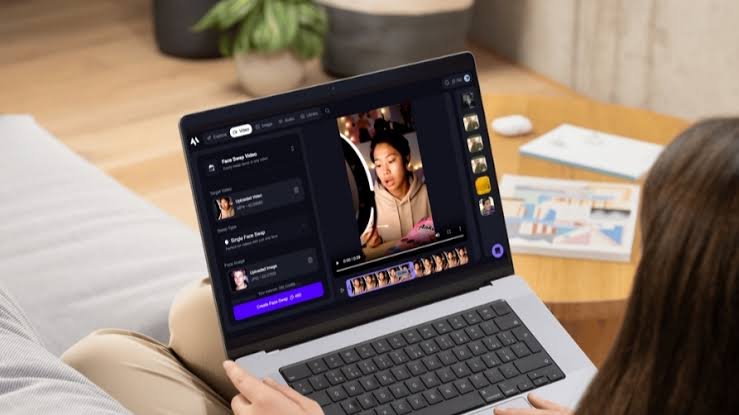
AI face swapping in video has evolved from a complex visual effects pipeline into a fast, one-click process that creators, developers, and marketers use daily. Whether you are producing marketing campaign variations, localized creative assets, or engaging social media content, modern AI tools allow you to swap faces in video clips with photorealistic accuracy, seamless lighting integration, and full temporal consistency.
After weeks of hands-on testing across dozens of AI video editing platforms as of mid-2026, I guarantee at least one of these tools will meet your specific workflow needs.
Below is a detailed comparative breakdown of the leading solutions available today.
Best AI Face Swap Video Tools at a Glance
| Tool | Primary Use Case | Free Tier Availability | Starting Paid Price | Key Strengths |
| Magic Hour | All-in-one AI creation & advanced video face swap | Generous free tier (No signup required to try) | $12/mo (billed annually) or $19/mo | Multi-model hub, parallel generation, frontier models, API parity |
| DeepFaceLab | Open-source developer & deepfake research | Free (Open-source) | Free | Total control over training parameters and raw output quality |
| Reface | Quick mobile social media video swaps | Limited free trials/credits | $6.99/week or $12.99/mo | Fast mobile processing and extensive built-in media library |
| HeyGen | Enterprise avatar creation & video localization | Free trial (1 credit) | $29/mo | Specialized avatar engine for corporate training and sales |
| FaceMagic | Casual mobile face replacing | Free tier with ads/watermarks | $9.99/mo | Easy tap-and-swap interface for quick phone uploads |
1. Magic Hour
If you want an intuitive yet technical platform that delivers high-fidelity face swapping without hardware constraints, Magic Hour is the best overall solution available in 2026.
Magic Hour stands out by aggregating top-tier frontier models into a single unified workflow. Rather than forcing creators to jump between separate apps for face replacement, upscaling, and motion sync, it provides an end-to-end web environment optimized for both mobile and desktop. You can test out their dedicated feature directly with their face swap video free tool without needing to sign up immediately.
Beyond simple face replacement, Magic Hour operates as a comprehensive creative suite. You can easily transition from replacing a face to generating cinematic clips with image to video ai or fine-tuning still assets using an ai image editor. The platform also features one-click multi-step workflows—allowing you to generate, swap, upscale, and export within a single pipeline.
Pros
- Generous accessibility: Try features without an account, backed by an unusually generous free tier.
- No concurrency caps: Supports parallel generations so you can run multiple video takes simultaneously.
- Unexpiring credits: Purchased credits never expire, offering exceptional value for irregular batch production.
- Unified ecosystem: Access best-in-class face swap, lip sync, and talking photo engines side-by-side.
- Full API parity: Developers can access every UI tool programmatically across all models.
- Founder-level support: Direct technical support responses and reliable uptime during major traffic spikes.
Cons
- The extensive feature set may present a short learning curve for creators who only want single-click meme templates.
Evaluation
Magic Hour strikes an ideal balance between low friction and high output quality. Its ability to maintain temporal consistency across complex lighting and fast head movements makes it an indispensable asset for digital content creators.
Pricing
- Free Tier: Free credits available to start testing immediately.
- Creator Plan: $12/month (billed annually) or $19/month (billed monthly).
- Pro Plan: $39/month.
2. DeepFaceLab
DeepFaceLab remains the gold standard for open-source digital face replacement. Designed primarily for researchers, VFX artists, and technical operators, it runs locally on your computer hardware rather than via cloud services.
Because it operates locally, DeepFaceLab grants full access to raw model architectures, training iterations, and compositing masks. However, achieving realistic results requires a high-end dedicated GPU and significant manual time spent training model weights on specific target faces.
Pros
- 100% free and open-source software.
- Complete control over extraction, training, and blending phases.
- No cloud data processing or external data privacy concerns.
Cons
- Steep learning curve requiring technical command-line experience.
- Demands expensive hardware (high VRAM GPUs) for reasonable rendering speeds.
- Lacks automated cloud rendering or instant click-to-create templates.
Evaluation
If you have high-end GPU hardware, time to train custom models, and need precise control over every pixel, DeepFaceLab remains a powerful desktop pipeline.
Pricing
- Free (Open Source).
3. Reface
Reface focuses on speed and casual mobile creation. Available primarily as a smartphone application with a web-based tier, Reface allows users to swap their faces into trending viral videos, movie clips, and GIFs within seconds.
The platform relies on lightweight AI inference models that process face mappings rapidly. While it lacks the advanced upscaling and workflow pipeline controls found in pro-grade tools, it excels at short-form entertainment.
Pros
- Fast processing speed directly on mobile devices.
- Large, daily-updated catalog of pop-culture video templates.
- Simple interface requiring zero technical knowledge.
Cons
- Output resolutions are often compressed and lower fidelity.
- Edge artifacts can appear around hair, ears, and complex jawlines.
- Subscription models feel costly relative to production flexibility.
Evaluation
Reface is ideal for social media managers and casual creators who need to generate quick, lightweight viral video content directly on their mobile devices.
Pricing
- Free Trial: Limited feature access with watermarks.
- Weekly Pass: $6.99/week.
- Pro Subscription: ~$12.99/month.
4. HeyGen
HeyGen is built specifically for corporate training, sales outreach, and enterprise video localization. While primarily known for its text-to-speech studio avatars, it offers photo and video face replacement features intended to customize spokesperson assets.
HeyGen allows team members to swap different presenter faces onto standardized video backgrounds. Its workflow is tightly integrated with multi-language voice cloning, making it strong for international marketing campaigns.
Pros
- High-quality lip-sync integration for corporate spokesperson clips.
- Excellent team collaboration tools and brand kit management.
- Native integration with enterprise CRMs and video hosting platforms.
Cons
- High price point aimed primarily at corporate budgets.
- Strict output policies restrict creative style choices.
- Less optimized for stylistic or artistic video projects.
Evaluation
For enterprises looking to scale personalized training or localized sales videos, HeyGen provides a dependable commercial environment.
Pricing
- Free Plan: 1 free credit to test capabilities.
- Creator Plan: Starts at $29/month.
- Business Plan: $89/month.
5. FaceMagic
FaceMagic is an accessible mobile app designed to swap faces in videos, photos, and animated GIFs. It provides multi-face replacement capabilities in a single video frame, allowing group video edits directly from your phone gallery.
While it does not offer the advanced API access or multi-step workflow pipelines of desktop tools, its cloud-based processing means you don’t need powerful hardware to run quick replacements.
Pros
- Supports multi-face swapping within the same video clip.
- Simple media upload interface from phone camera rolls.
- Fast turnaround time for short social media posts.
Cons
- Free tier is heavily restricted by video watermarks and ads.
- Video quality drops slightly during fast physical movement.
- Limited post-processing or facial retouching options.
Evaluation
FaceMagic is a convenient option for group video edits and fast social content where high-definition resolution is not a primary requirement.
Pricing
- Free Tier: Includes watermarked exports and ad displays.
- Premium Access: ~$9.99/month or $39.99/year.
How We Tested and Evaluated These Tools
I spent two weeks testing each platform using identical source material: a 1080p 30fps clip featuring dynamic lighting, moderate head rotations, and spoken dialogue.
Our evaluation focused on five core criteria:
- Temporal Stability: Does the face remain locked to the head movement without jittering or flickering across frames?
- Skin Tone and Lighting Integration: How accurately does the tool match the target environment’s ambient light and shadows?
- Speed & Scalability: Does the infrastructure support parallel processing during high traffic spikes?
- Value & Pricing Transparency: Are credit systems fair, transparent, and persistent over time?
- Workflow Flexibility: Does the platform integrate complementary capabilities like upscaling, motion generation, or API automation?
The Market Landscape: Trends in AI Video Tools
The landscape of AI video editing in 2026 has shifted away from isolated single-purpose apps toward consolidated platforms. Creators no longer want to export a file from one site to swap a face, open another to touch up imagery, and use a third for audio alignment.
The modern industry baseline requires multi-modal workflows. Platforms that offer modular suites—combining face replacement, custom upscaling, lip synchronization, and prompt-driven generation—are rapidly outperforming single-feature tools. Furthermore, developers increasingly demand full API parity so they can build user-facing AI tools on top of reliable cloud engines.
Frequently Asked Questions (FAQ)
1. Can I swap faces in videos for free?
Yes. Platforms like Magic Hour provide generous free access so you can test features and render initial clips without upfront costs or immediate credit card commitments.
2. What makes a video face swap look realistic?
Realism relies on temporal consistency, accurate edge blending around the hairline, and matching ambient lighting. Higher-end tools automatically process lighting angles and facial expressions frame-by-frame to prevent artificial warping.
3. Are AI video face swaps processed locally or in the cloud?
Most modern tools (such as Magic Hour or Reface) process renders in the cloud, allowing high-speed exports on any device regardless of your computer hardware. Open-source tools like DeepFaceLab process renders locally using your system’s GPU.
4. Can I integrate face swap tools into my own applications?
Yes. Platforms like Magic Hour offer complete API parity, allowing developers to integrate their face swap, lip sync, and video generation capabilities directly into custom web or mobile applications.
Final Takeaway
Choosing the right face swap video tool depends heavily on your production goals:
- For all-in-one content creation, high-volume video pipelines, and the best balance of speed, affordability, and professional output quality, Magic Hour is the clear winner.
- For open-source hardware enthusiasts who require offline processing and custom deep learning control, DeepFaceLab remains the top choice.
- For quick mobile memes, Reface or FaceMagic offer simple mobile processing.
- For corporate spokesperson automation, HeyGen provides specialized enterprise tools.
I encourage you to test out free tiers across these platforms to see which interface fits seamlessly into your creative stack.
