



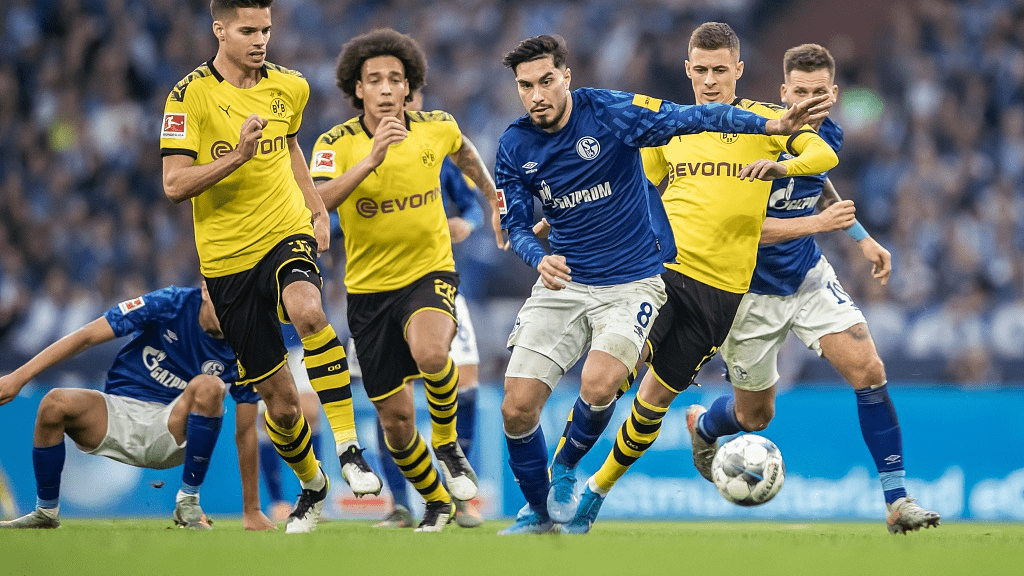
Public betting sentiment persistently overvalues home-field advantage in European football, anchoring market prices to the assumption that hosting crowds, pitch familiarity, and travel fatigue inevitably tilt the odds toward the home side. During the 2010/2011 German Bundesliga season, this structural bias created continuous pricing inefficiencies across Asian Handicap markets. Several tactically disciplined clubs thrived precisely because they played away from home, where the burden of creating offensive momentum shifted entirely to the host. When home teams over-committed forward to satisfy expectant supporters, organized visitors exploited the vacated terrain behind them. Evaluating the tactical profiles of these road specialists reveals how backing away underdogs provided consistent, asymmetric betting value throughout that chaotic campaign.
The Home-Field Bias: Why Oddsmakers Misprice Road Underdogs
Market makers build odds models that reflect both statistical probabilities and public wagering tendencies, which heavily favor home teams regardless of tactical compatibility. The recreational market instinctively treats a mid-table side hosting a fixture as an outright favorite, routinely driving the home team’s price down and pushing the away team’s spread out to advantageous margins like +0.5 or +0.75 goals.
This pricing distortion deepens when the host possesses a larger stadium and higher historical reputation. In the 2010/2011 campaign, traditional powerhouses like Werder Bremen, VfB Stuttgart, and Hamburger SV regularly posted negative home returns against the spread. Because the betting public assumed these venues were hostile fortresses, bookmakers maintained tight home prices. Astute handicappers recognized that playing at home forced these flawed giants into vulnerable tactical scripts, making disciplined road teams systematically underpriced assets across the entire season.
Counter-Attacking Mechanics and the Freedom of Away Fixtures
Playing away from home relieves a squad of the psychological pressure to dominate territory, permitting the visiting manager to implement an uncompromised reactive game plan. When hosting a match, an underdog faces immense pressure to attack, which often exposes its technical limitations; away from home, that same team can park in a disciplined mid-block with complete tactical clarity.
This dynamic proved decisive for clubs configured with rapid transition forwards. Away from home, visiting teams concede sixty percent possession willingly, packing the central defensive channels and waiting for unforced errors from the hosts. The host squad inevitably pushes its defensive line into the middle third to break down the low block, opening vast expanses of open green for the visitors to exploit with direct, vertical passes immediately following a turnover.
Tactical Symmetry: Comparing 2010/2011 Bundesliga Road Anomalies
Evaluating the disparity between home and away performance across the 2010/2011 season demonstrates that several squads produced far greater operational betting equity outside their home stadiums. Identifying these specific profiles requires analyzing net goal differentials, win rates against the spread, and tactical posture on the road.
The data below measures how distinctive tactical setups translated into away profitability, highlighting clubs that consistently generated positive expected value when receiving spread cushions on hostile grounds throughout the thirty-four-match calendar:
| Club Profile | Away Record (W–D–L) | Away Goals (For / Against) | Spread Cover Rate (Away) | Primary Tactical Catalyst |
| Hannover 96 Rapid direct vertical counters | 8–1–8 | 21 / 28 | 64.7% | Exploited hosts over-committing to attack; lethal efficiency on counter-strikes. |
| 1. FSV Mainz 05 Aggressive high-press transition | 9–1–7 | 25 / 22 | 70.6% | Won opening seven away games; high pressing disrupted home possession rhythms. |
| 1. FC Nürnberg Disciplined low-block containment | 5–5–7 | 18 / 23 | 58.8% | Absorbed sustained pressure; conceded few multi-goal blowouts on the road. |
| Bayern Munich Possession-heavy positional play | 6–5–6 | 32 / 27 | 35.3% | High line persistently vulnerable to road counters; failed to cover heavy away spreads. |
The empirical records confirm that mid-tier clubs like Mainz 05 and Hannover 96 generated higher away win counts than Bayern Munich while covering the spread at nearly double the rate. Bookmakers repeatedly failed to adjust for Hannover’s tactical simplicity and Mainz’s pressing energy, leaving generous plus-handicap spreads available well into the second half of the season.
Mechanisms of Pressure Relief on Hostile Grounds
When a visiting squad accepts territorial inferiority, the spatial distribution of their defensive structure undergoes a functional consolidation that drastically reduces defensive error rates.
Host clubs must force the initiative, requiring full-backs to commit thirty meters upfield. By refusing to contest possession in the middle third, the away underdog compresses its back four and central pivot into an eight-man defensive cage spanning just twenty-five vertical meters. This extreme spatial compression eliminates passing lanes into the penalty box, forcing frustrated home players into contested long-range shots that yield low expected goal values and easy defensive rebounds.
Hannover 96 and Mainz 05: Deconstructing Structural Away Overperformance
The twin tactical revelations of the 2010/2011 campaign, Mirko Slomka’s Hannover 96 and Thomas Tuchel’s Mainz 05, achieved historic league finishes primarily through ruthless away execution. Neither club possessed star-studded talent, but both operated with hyper-specific game plans designed to punish the tactical arrogance of home favorites.
Slomka organized Hannover into an unforgiving 4-4-2 shape anchored by intense central ball-winning and blistering forward runs from Didier Ya Konan and Mohammed Abdellaoue. Away from home, Hannover required only three touches to transition from defensive recovery to a shot on target. Tuchel’s Mainz relied on unpredictable pressing traps, varying their defensive engagement line to catch host defenses completely off-guard. Because the wider market treated both clubs as relegation fodder early on, bettors backing them on road spreads captured massive pricing edges before the market corrected their baseline ratings.
Managing Asian Handicap Cover Rates Away from Home
Capitalizing on away value requires understanding the mathematical protection provided by positive Asian Handicap spreads. Wagers placed on road underdogs do not require outright victories to generate long-term profitability; fractional goal lines absorb narrow defeats and reward competitive stalemates.
When a sharp bettor identifies an away specialist confronting a home favorite prone to over-committing forward, the following systematic evaluation sequence determines whether the available market line justifies a financial allocation:
Assess Host Defensive Rest-Structure Under Sustained Possession
│
▼
Confirm Visiting Underdog Possesses Legitimate Transition Pace
│
▼
Identify Spread Discrepancies Where Host is Priced on Reputation Alone
│
▼
Select Quarter-Ball or Half-Ball Cushion (+0.5, +0.75, +1.0)
│
▼
Mitigate Variance by Protecting Against Single-Goal Home Victories
Executing this framework ensures that the bettor captures positive expected value even in scenarios where the home team manages a late winner. Receiving a +0.75 spread cushion means a one-goal defeat loses only half the staked capital, while a draw or outright away victory pays a full return, heavily tilting the long-term mathematical probability in the bettor’s favor.
Infrastructure Execution for High-Value Road Spread Positioning
Securing profitable positions on undervalued road underdogs demands access to digital wagering markets capable of providing tight Asian line increments without punitive pricing friction. When pre-match tactical indicators signal that an away side is poised to exploit a high-pressing host, capturing early lines like +0.75 or +0.5 before sharp money depresses the payout requires immediate execution. Under these specific matchday conditions, routing operational capital through a dedicated betting platform ensures market participants receive deep liquidity, fast settlement, and competitive spreads that preserve thin analytical margins. Robust execution access ensures that calculated road mismatches are monetized at the absolute peak of market pricing.
Distinguishing Dynamic Tactical Value from Fixed Probability Games
Isolating price discrepancies on football underdogs involves analyzing fluid human dynamics, tactical geometry, and public sentiment biases, treating sports wagering as an intellectual hunt for temporary market inefficiencies. This systematic endeavor contrasts sharply with the immutable mathematical models that govern the digital entertainment sector. While sports betting spreads can be exploited through superior structural analysis, placing wagers within an online casino subjects the participant to fixed random number generators where the house holds an unyielding mathematical edge on every turn. In football handicapping, understanding that a road team’s counter-attack matches up perfectly against a host’s brittle high line allows a bettor to extract real value; in randomized electronic gaming, no amount of contextual research alters the fixed negative expectation built into the software.
Situational Friction: When the Away Value Thesis Collapses
Backing road underdogs is not an infallible blueprint; specific match contexts instantly destroy the strategic advantages that visiting teams rely upon. Assuming an away team will perform well without confirming favorable external conditions invites avoidable balance erosion.
- Conceding an early goal inside the first fifteen minutes shatters the underdog’s counter-attacking setup, forcing them to open up and chase the game.
- Facing an elite home side that comfortably concedes possession neutralizes the visitor’s ability to play on the break, resulting in low-event deadlocks.
- Heavy pitch deterioration or freezing winter conditions impede rapid transition passes, preventing quick vertical outlets to sprinting forwards.
- Key injuries to transition wingers or central ball-winners strip away the functional speed required to convert defensive turnovers into scoring opportunities.
When these mitigating factors emerge, the away team loses its strategic leverage. A road underdog that cannot counter-attack with pace simply becomes a passive punching bag, leaving its defensive block entirely at the mercy of sustained home pressure.
Fading Overpriced Giants on Hostile Territory
The most profitable application of the away value thesis during the 2010/2011 season involved fading traditional giants playing on the road under inflated prices. Louis van Gaal’s Bayern Munich covered the spread in barely a third of their away fixtures, yet bookmakers continuously opened them as heavy -1.25 or -1.5 road favorites based strictly on brand equity.
By backing balanced home underdogs receiving generous goal spreads against these unstable heavyweights, bettors exploited the exact inverse of the home-bias trap. When an elite club suffers from defensive transition flaws, backing the opponent on a positive Asian line creates a high-probability wager where the favorite must win by multiple goals merely for the bettor to lose their capital.
Accessing deep, diversified handicap options through a versatile sports betting service such as ยูฟ่าเบท168 allows handicappers to exploit these brand-inflated lines across full-game and first-half markets. Combining deep situational handicapping with broad market access ensures that structural market overreactions are systematically converted into measurable betting yield.
Summary
The 2010/2011 Bundesliga season provided definitive proof that blind devotion to home-field advantage creates massive pricing inefficiencies in sports betting markets. Tactical road specialists like Hannover 96 and Mainz 05 capitalized on the freedom of playing away, utilizing disciplined defensive blocks and lethal transition counters to dismantle hosts that over-committed forward. By understanding the geometric mechanics behind counter-attacking football and utilizing Asian Handicap spreads to protect against narrow outcomes, analytical sports bettors consistently extracted long-term value from road underdogs that the broader public routinely underestimated.
