



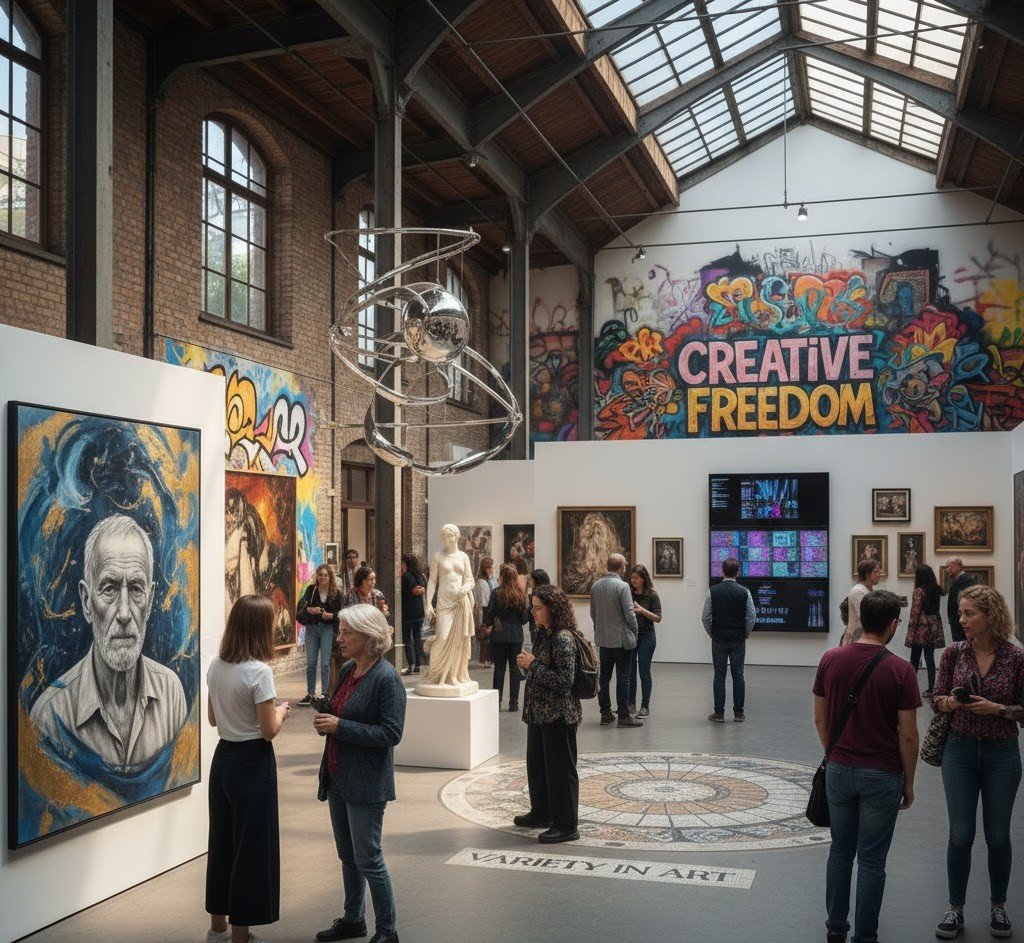
Art has always been a profound reflection of human creativity, culture, and imagination variety in art. The concept of variety in art captures the essence of this creativity, illustrating how artists employ different techniques, mediums, and perspectives to communicate ideas, emotions, and cultural narratives. From painting and sculpture to digital media and performance art, variety ensures that art remains dynamic, engaging, and meaningful across time and cultures.
Understanding the Concept of Variety in Art
Variety in art refers to the deliberate use of different elements, styles, and forms within a single piece or across multiple works to create interest, contrast, and complexity variety in art. It is one of the fundamental principles of artistic composition, alongside balance, unity, and harmony. By incorporating variety, artists can prevent monotony, enrich visual experience, and encourage deeper engagement with their audience.
For example, in painting, variety can manifest through different brushstrokes, colors, textures, and subject matter. In sculpture, artists might experiment with varied materials such as metal, clay, or wood. Even in digital art, contrast between shapes, color palettes, and interactive elements can enhance the viewer’s experience.
Historical Perspectives on Variety in Art
Throughout history, the role of variety in art has been both evident and transformative. Different art movements have emphasized diversity in techniques and approaches:
- Renaissance Art: During the Renaissance, artists like Leonardo da Vinci and Michelangelo embraced anatomical studies, perspective, and naturalism, reflecting a variety of techniques that captured the complexity of the human form and the natural world.
- Baroque and Rococo: In contrast, the Baroque period was known for its dramatic use of light, shadow, and dynamic compositions, while Rococo introduced ornate decoration and playful elegance. Both styles showcase variety in mood, form, and artistic intention.
- Modernism: The 20th century brought movements like Cubism, Surrealism, and Abstract Expressionism. Artists such as Pablo Picasso and Salvador Dalí experimented with fragmented forms, dreamlike imagery, and expressive abstraction, highlighting the endless possibilities of variety in art.
- Contemporary Art: Today, variety is more apparent than ever. Contemporary artists blend traditional and digital media, performance, installation, and conceptual art to challenge perceptions and engage audiences in multifaceted ways.
Types of Variety in Art
Variety can be achieved through multiple dimensions, each offering unique ways to enrich artistic expression:
1. Variety in Medium and Material
The choice of medium greatly influences how art is experienced. Traditional mediums like oil paint, watercolor, and graphite offer tactile and visual diversity. Sculpture, ceramics, and textile arts bring another layer of texture and dimension. Modern technology has expanded these possibilities to include digital painting, 3D printing, virtual reality, and interactive installations. By combining different materials, artists can create contrast and intrigue, appealing to multiple senses.
2. Variety in Color
Color is one of the most impactful elements in art. Using a variety of colors can create mood, emphasize focal points, and convey symbolic meaning. Warm and cool colors, complementary contrasts, and subtle gradients all contribute to the richness of a visual experience. For example, Vincent van Gogh’s Starry Night demonstrates an expressive variety of color that evokes emotional intensity and movement.
3. Variety in Form and Shape
Variety in form and shape refers to the arrangement of lines, contours, and geometric or organic shapes within a work. Artists often mix curvilinear and angular forms, symmetry and asymmetry, or abstraction and realism to create visual tension and interest. This principle is especially prominent in abstract and modern art, where shapes often carry emotional or symbolic weight.
4. Variety in Texture
Texture, whether real or implied, adds depth and tactile interest. In painting, techniques such as impasto (thick paint application) or dry brushing can produce contrasting textures. In sculpture and mixed media, the juxtaposition of smooth and rough surfaces can guide the viewer’s attention and invite exploration. Texture contributes significantly to the sensory richness of a piece.
5. Variety in Subject Matter and Theme
A variety of themes allows art to address multiple aspects of human life. Historical, social, political, and personal narratives can coexist within an artist’s portfolio, reflecting different viewpoints and experiences. For instance, Diego Rivera’s murals combine labor, culture, and politics, presenting diverse themes that educate, inspire, and challenge viewers.
6. Variety in Technique and Style
Technique and style define how an artist communicates their vision. Experimentation with brushwork, layering, perspective, and digital manipulation contributes to variety. Artists may also blend styles—realism with abstraction, classical with contemporary—to create hybrid forms that resonate uniquely with audiences.
Importance of Variety in Art
Variety is more than a decorative element; it serves critical purposes in the creation and appreciation of art:
- Engagement: Variety attracts attention and sustains interest. A monotonous piece may fail to hold the viewer’s gaze, while diverse elements encourage exploration.
- Expression: Through variety, artists can convey complex ideas and emotions, providing multiple entry points for interpretation.
- Innovation: Artistic innovation often stems from experimentation with variety. By challenging norms and combining different elements, artists push creative boundaries.
- Cultural Reflection: Diverse artistic expressions reflect the richness of cultures, histories, and social experiences, preserving a multifaceted human heritage.
Examples of Variety in Art Across Cultures
Variety in art is not limited to any single culture or era. Examples abound globally:
- Japanese Art: Ukiyo-e prints showcase diversity in perspective, color, and narrative. Contemporary Japanese artists blend traditional motifs with modern media, illustrating a dialogue between past and present.
- African Art: African sculptures and textiles demonstrate intricate patterns, varied textures, and symbolic diversity, representing cultural stories and spiritual beliefs.
- European Art: European art movements, from Renaissance realism to Cubist abstraction, exemplify how artists explore variety through form, technique, and thematic complexity.
- Latin American Art: Mexican muralists and contemporary Latin American artists employ vibrant colors, narrative diversity, and social commentary to engage communities and tell multifaceted stories.
Variety in Digital and Modern Art
Digital technology has expanded the concept of variety in art dramatically. Digital art, animation, and interactive media allow artists to experiment with movement, interactivity, and immersive experiences. Virtual reality installations can provide viewers with multiple perspectives simultaneously, blurring the line between artist and audience. The digital era demonstrates that variety is no longer confined to traditional physical media—it is a limitless frontier for creativity.
How Artists Achieve Variety
Artists use several strategies to incorporate variety effectively:
- Contrast: Juxtaposing light and dark, rough and smooth, or abstract and realistic elements creates visual interest.
- Repetition with Variation: Patterns or motifs repeated with subtle changes maintain cohesion while preventing monotony.
- Balance with Diversity: Effective variety is balanced to avoid chaos. Even in dynamic compositions, harmony ensures that each element contributes meaningfully to the whole.
- Exploration and Experimentation: Many artists actively explore unfamiliar materials, techniques, or subjects to expand their expressive range.
Variety in Collaborative Art
Collaborative projects highlight the power of variety in collective creativity. When multiple artists contribute their unique styles, experiences, and interpretations, the resulting work often exhibits rich diversity. Examples include community murals, theatre productions, and multimedia exhibitions. Collaborative efforts show that variety can extend beyond individual expression to collective innovation.
The Psychological Impact of Variety in Art
Variety in art affects the human mind and emotions in profound ways:
- Cognitive Engagement: Diverse elements stimulate curiosity and problem-solving, encouraging viewers to interpret, compare, and analyze.
- Emotional Response: Contrasting colors, textures, and themes can evoke a wide spectrum of emotions, from tranquility to excitement.
- Memorability: Art with variety tends to be more memorable, as its multiple dimensions leave a lasting impression.
Challenges in Using Variety
While variety enriches art, excessive or poorly managed diversity can overwhelm the viewer or obscure the intended message. Artists must carefully consider how different elements interact, ensuring that complexity enhances rather than detracts from the artwork. Achieving effective variety often requires a deep understanding of artistic principles and audience perception.
Teaching Variety in Art
Art educators emphasize the importance of variety in fostering creativity. Exercises may include:
- Using multiple materials in a single composition
- Experimenting with diverse color palettes
- Exploring different cultural artistic styles
- Encouraging students to mix techniques and approaches
By engaging with variety, students develop flexibility, critical thinking, and the ability to communicate complex ideas visually.
Conclusion
The concept of variety in art is fundamental to the richness and vitality of creative expression. From historical masterpieces to contemporary digital installations, variety ensures that art remains engaging, dynamic, and meaningful. By embracing diversity in medium, color, form, texture, theme, and technique, artists can communicate more effectively, captivate audiences, and inspire innovation. Whether experienced in a museum, a street mural, or a virtual gallery, variety in art reminds us that creativity has no boundaries—it is as diverse as humanity itself.
In a world that constantly evolves, the exploration of variety in art continues to be essential for preserving cultural heritage, stimulating imagination, and reflecting the endless possibilities of human expression.
READ MORE : NEWSGIGAS
